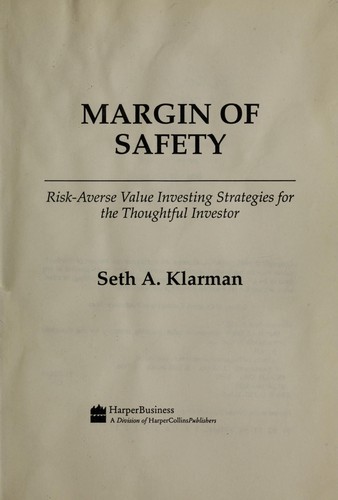
Margin of Safety · 1991
Seth Klarman on margin of safety and the discipline of patience
Why the 'Oracle of Boston' obsesses over avoiding loss first — and treats cash as a position, not a failure.
Seth Klarman's out-of-print book Margin of Safety is so sought-after that used copies sell for four figures. Its philosophy, echoed in his Baupost letters, starts from an unusual place for a money manager: an almost fanatical focus on not losing.
Loss aversion as a strategy
Klarman is a 'risk-averse value investor.' The first question he asks isn't how much he can make, but how much he can lose if he's wrong. Buying with a margin of safety — a meaningful gap between price and conservative estimate of value — is what protects against bad luck, bad analysis, and the future's fundamental unknowability.
“Value investing is at its core the marriage of a contrarian streak and a calculator.”
Cash is a position
Because he refuses to overpay, Klarman is famously willing to hold large amounts of cash when bargains are scarce — enduring the discomfort of sitting out rather than the far greater danger of buying overvalued assets. Patience, for Klarman, is not passivity; it is the discipline of waiting for the fat pitch.
- Ask what you can lose before what you can make.
- A margin of safety is protection against being wrong.
- Holding cash when nothing is cheap is a decision, not a failure.
This is an original explainer by Value Investors Club, not the essay itself. Read Seth Klarman's original ↗.