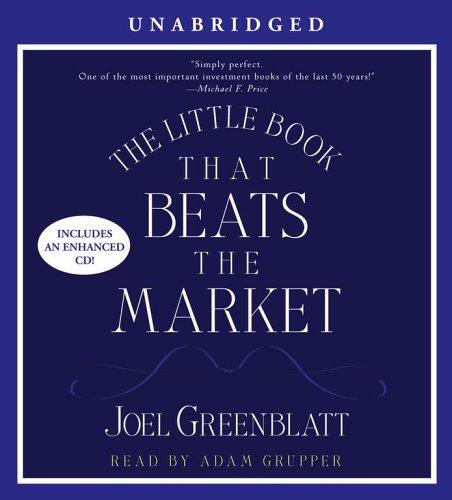
The Little Book That Beats the Market · 2005
Joel Greenblatt's Magic Formula, explained
Buy good businesses at bargain prices — turned into a two-number screen a teenager could follow.
Joel Greenblatt compounded roughly 40% a year for two decades at Gotham Capital. In The Little Book That Beats the Market he distilled value investing into a mechanical rule simple enough, he joked, to teach his children.
Two questions, two ratios
The 'Magic Formula' ranks companies on two dimensions and buys the best combination of both: a good business (high return on capital) selling at a bargain price (high earnings yield). Rank every company on each metric, add the ranks, and buy the top of the combined list — then rebalance annually.
“Buying good companies at bargain prices makes a lot of sense.”
Why it works — and why it's hard
The formula captures the two things value investors care about most, quality and price, without forecasting. But Greenblatt is candid that it underperforms for stretches long enough to make most people quit — which is precisely why the edge survives. The discipline to stick with it is the hard part.
- Combine business quality (ROIC) with cheapness (earnings yield).
- A simple, rules-based process beats gut feel for most investors.
- The strategy's periodic underperformance is the source of its edge.
This is an original explainer by Value Investors Club, not the essay itself. Read Joel Greenblatt's original ↗.